
Stonecrest Previous-Resident Sources
Different eras require different evidence. Start with the newest dependable record and move backward. The exact online beginning year for the DeKalb deed service is not stated by the clerk, so an honest timeline distinguishes the county's long record history from the portion visible on a vendor portal.
| Source | Local time span | Where kept | What it adds |
|---|---|---|---|
| Property/tax portal | Current and retained prior years; start unstated | DeKalb Property Appraisal | Owner, situs/mailing, parcel, building |
| Deed books and index | 1822 onward, with 1842 loss; online start unstated | Superior Court Clerk | Legal ownership chain |
| DeKalb directory | 1939 | DeKalb History Center | Resident, occupation and address where covered |
| Tucker/Stone Mountain directories | 1970, 1972, 1974-1976 | DeKalb History Center | Eastern-DeKalb address leads |
| DCPL directories | Dating to 1928; gaps vary | Decatur Library | Print and microfilm household leads |
| Federal census | Public schedules through 1950 | NARA and library resources | Household, kinship, age and occupation |
| Permit/code files | Stonecrest 2017-forward | City departments | Work dates and responsible parties |
| Maps and aerials | Varies; exact local Sanborn years unconfirmed | DCPL, LOC and DLG | Street, footprint and land-use context |
Use title records to establish ownership first. Then use people-centered records to decide whether an owner or another household occupied the property. A gap should stay a gap unless a second source closes it.
Start Stonecrest History at Parcel
Enter the address in the DeKalb Property Search. Capture parcel ID, current owner, separate mailing and situs addresses, legal description, exemption clues and deed book/page if posted. The parcel ID is the best exact key in the county systems. A legal description may use district and land lot, subdivision, lot/block and a recorded plat reference.
Matching mailing and situs addresses plus homestead status support owner occupancy but do not prove it. A different mailing address suggests an absentee owner, entity ownership or a mail preference, not the identity of a renter. Previous-resident research should label the current name as a title owner until a directory, census or other source supports residence.
Walk DeKalb Deeds Backward
The DeKalb County Clerk of Superior Court Real Estate Division makes land records available online and through public computers. Use the current parcel card's deed reference, then follow the ownership chain one transaction at a time.
- Open the present acquisition deed and record grantee, grantor, execution and recording dates, book/page or instrument number and legal description.
- Search the seller, who is the grantor in that deed, as a grantee in older index entries.
- Compare land lot, subdivision, lot/block, plat and parcel references. Reject same-name deeds for other land.
- Repeat from each earlier acquisition. Try initials, spelling variants, former names and entity names when needed.
- When images or years stop online, use the clerk's public-access room and bound or microfilmed grantor-grantee indexes.
- Grantor
- The person or entity transferring an interest in land.
- Grantee
- The person or entity receiving that interest.
- Chain of title
- The linked sequence of ownership transfers for one parcel.
- Legal description
- The land-lot, subdivision, lot or plat language that identifies land more reliably than a mail address.
Deeds may also show consideration, witnesses, notary information and a return-to address. These are dated clues, not a list of all previous residents. A security deed is a financing instrument and should not be mistaken for a sale.
Cross Stonecrest's Online Cutoff
The clerk has not published a reliable earliest online year. Do not attach a made-up cutoff to a Stonecrest previous residents search. If a known book/page is missing, use the Clerk's Real Estate contact route or call 404-371-2836. If the reference itself is unknown, email mappingteam@dekalbcountyga.gov with the address or parcel ID. The Mapping Team can confirm the latest deed or plat book and page but does not provide copies or surveys.
The DeKalb History Center house-history method is the local fallback beyond easy web access. It moves from tax data to courthouse grantee indexes, then to deeds, plats, directories and maps. Since January 1, 2025, DeKalb requires real-estate self-filers to e-record with ID upload. That filing change did not erase counter access to older public records.
Note: Search names in both index directions, but keep the legal description constant so an unrelated same-name transfer does not enter the chain.
Match Stonecrest Households by Era
Owners are only one part of the story. Historical directories and census schedules can identify occupants, spouses, kin and occupations. Present Stonecrest streets may be filed under Lithonia, Stone Mountain, DeKalb or suburban Atlanta because Stonecrest incorporated in 2017. Start with the nearest available directory year and keep the publisher's original place label.
- Search the surname in the nearest directory year and record the exact address, spouse, occupation and employer.
- Use the street or reverse section when one exists, then inspect the abbreviation key.
- Move one available volume backward and forward. An appearance or absence is a lead, not proof of a move.
- Pair entries near 1930, 1940 and 1950 with the corresponding federal census schedule.
- Compare every household to deed owners, neighbors, occupation and the parcel's historic description.
The latest open decennial census is 1950 under the 72-year release rule. DeKalb County Public Library has Georgia census resources, directories dating to 1928, newspapers and local indexes at the Decatur Library Reference Desk. Details of the runs and how entries read belong to the Stonecrest directory book page.
Follow Stonecrest's Older Place Names
A single parcel may appear as Stonecrest in mail, Lithonia in an older directory, unincorporated DeKalb in a county record and a district or land-lot description in a deed. USPS authorization to use Stonecrest as an alternate mailing city did not redraw property lines. Likewise, incorporation created new city permit, code, council and court files but left deeds and assessments with DeKalb County.
No official source identified a Stonecrest-wide street-renumbering year. The safer bridge is the parcel ID, legal description, subdivision name and plat. Search both Stonecrest and Lithonia, plus Stone Mountain when a collection's coverage calls for it. Never “correct” an old source's place name, because that label can explain why a later address search fails.
Add Stonecrest Maps and Permits
Maps can date the setting around previous residents even when they do not name people. DeKalb County Public Library has Georgia Sanborn material, and the Library of Congress and Digital Library of Georgia provide map access. Research did not confirm exact Sanborn sheet years for Stonecrest, so verify historic Lithonia, Stone Mountain or DeKalb coverage before claiming a property appears.
City permit and code files begin under Stonecrest's post-2017 custody. Request by street address, parcel ID, permit or case number and date range. Results may identify owner, applicant, contractor, project scope, inspections or the person with legal control. Those roles add chronology but do not prove occupancy. Earlier inherited county permit years require a custodian request.
Aerial images, plats and building facts can show when a structure or subdivision appeared. Pair that physical date with the deed and household evidence. This prevents assigning earlier residents to a building that did not yet exist.
Close Stonecrest Resident Trails
When a name disappears, newspapers, obituaries, cemetery records and probate can explain the change. The Decatur Library holds the Georgia Death Index for 1919-1993, with 1994-1999 on CD-ROM, plus DeKalb News Era and metropolitan Atlanta papers. An obituary can connect relatives, a former address and burial place. Probate petitions, estate deeds or distributions can link heirs to the title chain after death.
DeKalb Probate Court keeps estates and marriage records. State vital certificates are restricted under Georgia law and are not a general resident directory. The official Georgia DPH request page explains mail, in-person and online routes for eligible requesters.
The DPH page is represented in this captured source view.
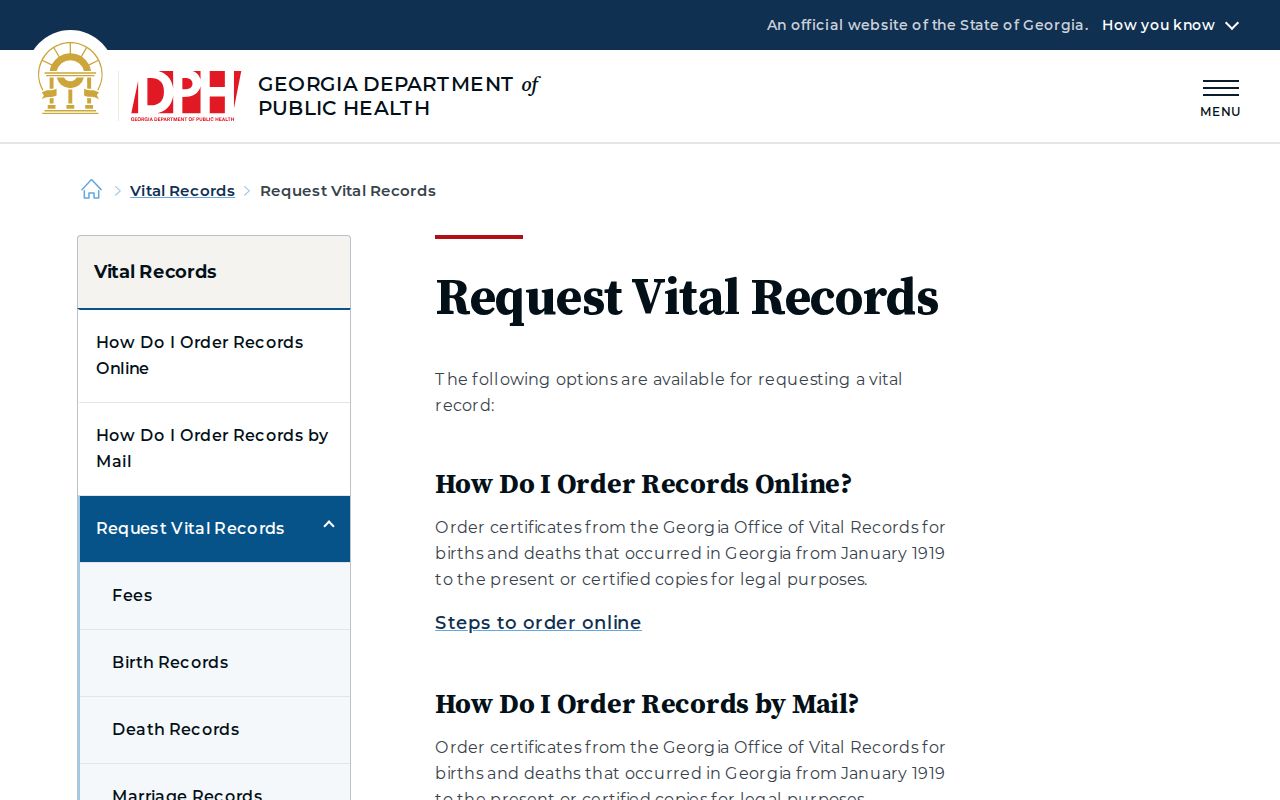
The image underscores that a certificate request is an eligibility-based endpoint, not the first step in finding who lived at a house.
Order Stonecrest Evidence Carefully
Georgia's ROVER service handles eligible online birth and death certificate orders. It asks users to choose the record type and document their right to receive it. For genealogy, public indexes and open archival schedules should be searched first; a certificate is used when legal eligibility and the research question justify it.
The ROVER order screen shows the official online route.
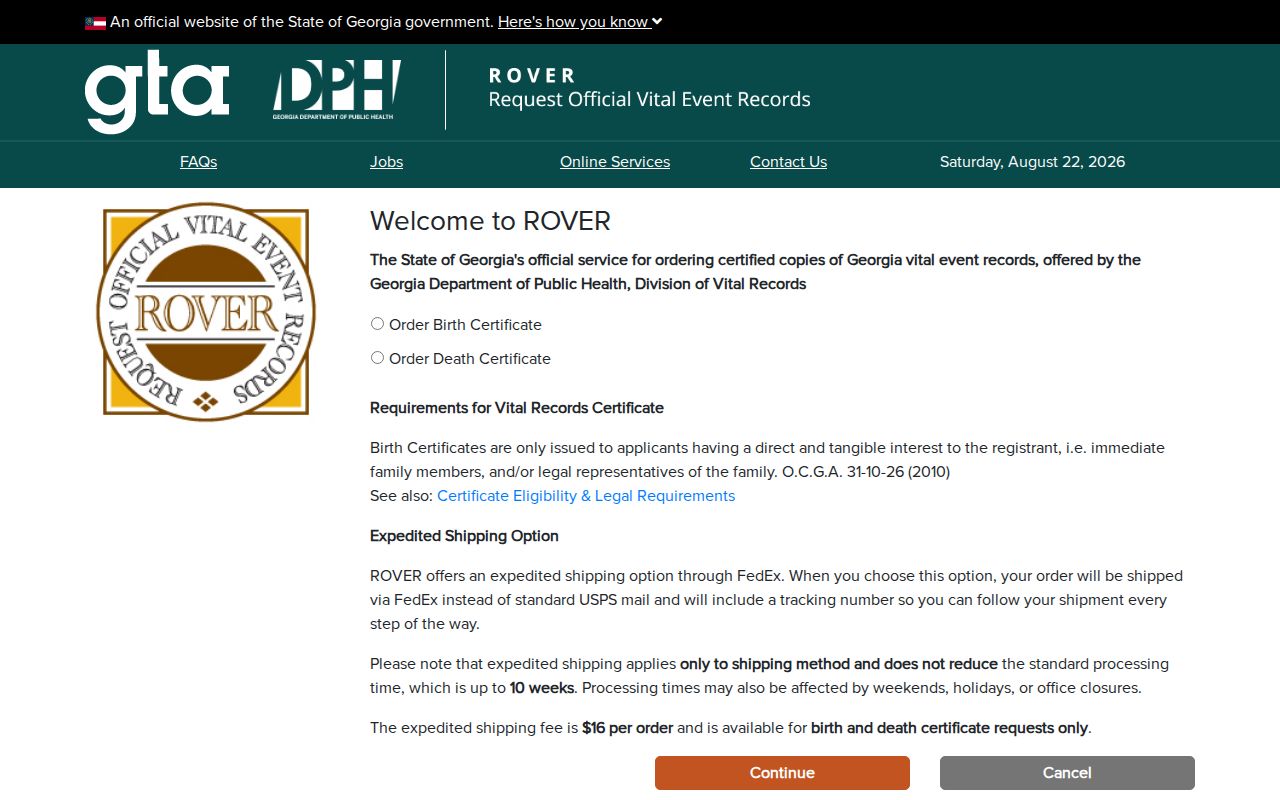
This portal can verify a documented endpoint in a family trail, but it does not search previous residents by address.
The DPH fee page is the current source for charges and accepted payments.
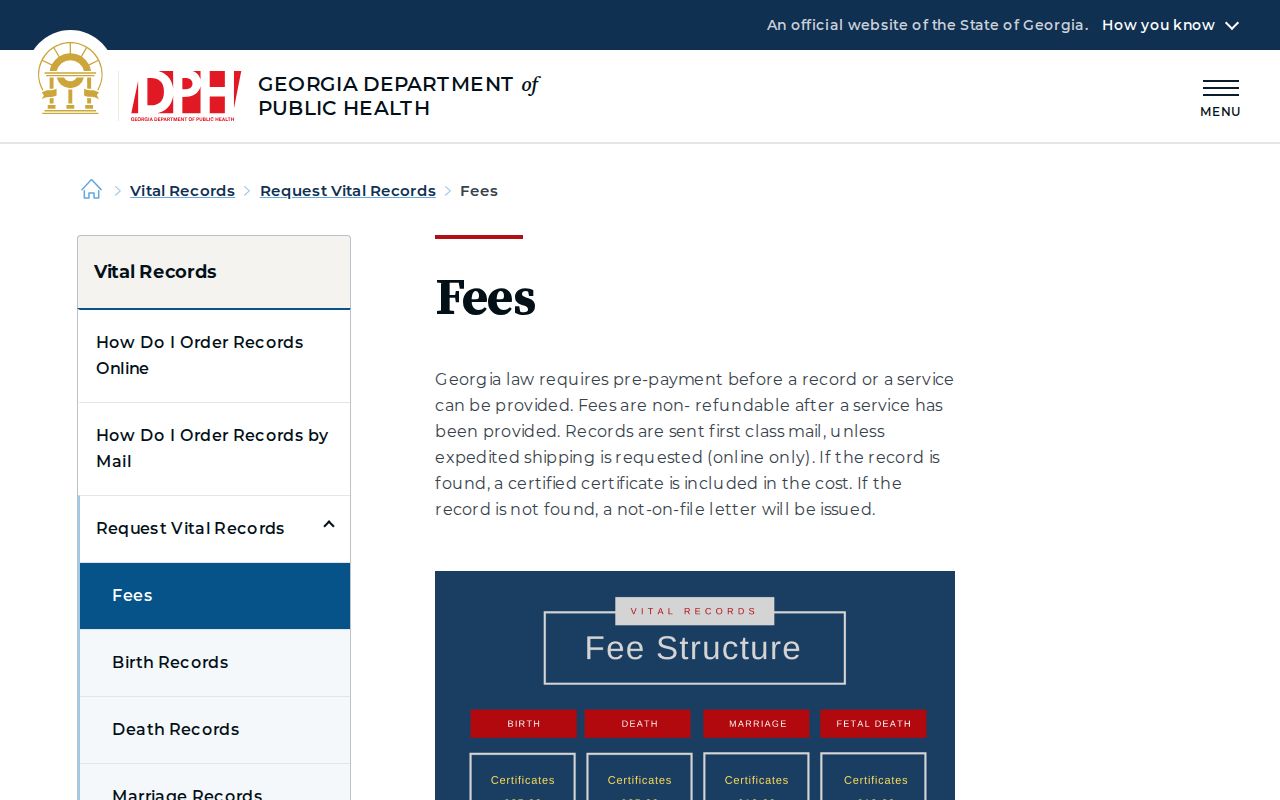
Check the live fee page before ordering because a secondary summary may be stale. DeKalb Probate Court separately charges $10 for each certified marriage certificate, license or application requested through its documented mail or counter process.
Rebuild Stonecrest's Lost Early Chain
DeKalb County was created in 1822, but the courthouse burned in 1842. The DeKalb History Center reports that only one volume of official county records survived. This is a true boundary in the previous-resident trail. A clean, complete pre-fire deed chain should be treated with skepticism unless the evidence shows how the gap was bridged.
Later deeds may recite older title. Tax digests, estates, plats, land-lottery records, churches, family Bibles, newspapers and family papers can supply other links. Flat Rock's post-emancipation schools, churches, cemetery sources and oral history are especially important because printed directories and title records can miss community continuity. State which source supports each step and mark unresolved years plainly.
Use Previous-Resident Records Lawfully
A deed names ownership, not a full household. A directory may omit rural areas or people the publisher did not include. A census is a periodic snapshot, and permit files name roles around work. Living people may use VoteSafe or Georgia Safe at Home to shield or substitute addresses in public records. Private utility, DMV and association data do not become public merely because an address is known.
Keep source dates and confidence notes beside each person. “Owner,” “directory occupant,” “census household member” and “probate heir” are distinct labels. This makes Stonecrest previous residents research useful for house history, genealogy and estate work without turning uncertain clues into claims about a living person.
Lawful use. Research past Stonecrest households for family or property history, and never use an address trail to stalk, harass or harm anyone.